In early 2026, a familiar foe for Washington in Iran and an unfamiliar all-out conflict with the regime, which began on Feb. 28 with the killing of the Iranian supreme leader, brought about the current conflagration in the Middle East.
The crisis in West Asia continues to have global ramifications, underscoring the strategic interconnectedness between South Asia and West Asia, as supply chain chokepoints have impacted various sectors including energy, logistics, aviation, and maritime implications.
A strange spotlight shone on US-Pakistan relations. Islamabad’s economic morass, with depleted coffers and political turmoil, has left Washington with little incentive to upgrade its partnership with Pakistan. No US president has visited Pakistan since President George W. Bush, when Afghanistan was central to an “AfPak” outlook in the post 9/11 era.
So, how did we get to Vice President JD Vance getting a red carpet welcome in Islamabad in April 2026 for negotiations to end the Iran War?
Many in India, and the rest of the world, remain flummoxed at how Islamabad has been reasserting its relevance as a geopolitical intermediary, as this goes against the geopolitical grain.
To unpack this, we need to revisit a different set of spring meetings, this time in 2025.
April 2 of last year was the day President Donald Trump dubbed “liberation day” and brought out a multicolored board to the Rose Garden, where he announced to the world a slew of tariffs, including on allies and trading partners. India was among them, and Trump later threatened much steeper tariffs over India’s continued purchases of Russian oil.
During those few months, the “T” word dominating geopolitical discourse was “tariffs.” However, another age-old “T” word— terrorism—soon shot through the headlines, leaving the picturesque town of Pahalgam blood-soaked.
Many in India remember the heinous attacks on Mumbai in 2008 that played out on live television over three days. What had changed since then?
One key element was in 2016, with the Uri attacks, as India surreptitiously sent its elite paramilitary commandos across the line of control to eliminate terror infrastructure. These retaliatory responses are now known as “surgical strikes.” In a conversation I later recorded with Lt. General Deependra Singh Hooda, he noted that a new precedent had been set, where India wouldn’t take asymmetric attacks lying down.
So, a decade later, with Pahalgam tourists being slain, New Delhi ordered its men in uniform to carry out Operation Sindoor. The results were missile strikes on nine targets in Pakistan and Pakistan-controlled Kashmir, targeting nefarious rogue actors.
Prime Minister Narendra Modi and his cabinet ministers were bold in their comments excoriating Islamabad and what India perceives as Rawalpindi’s long-held Janus-faced duplicity in its subterfuge of “bleeding India through a thousand cuts” by using non-state actors. While the fog of war convoluted details, the sentiment of fear was palpable with India attacking deeper into Pakistan, something unseen since 1971.
It was during Bill Clinton’s second term in 1999 when the Kargil heights erupted, first drudging fears of nuclear adversaries going to an all-out-war. The last time Washington intervened was when President Bill Clinton’s hand was forced, and he made quick phone calls and trips to both capitals, seeking détente.
This time, President Trump said he dialed for peace.
President Trump ran his 2024 campaign on eschewing multilateralism, ending what he dubbed “forever wars” and focusing on domestic priorities. So, it was par for the course that an administration that announced “liberation day” tariffs was a bit reluctant to wade into a tinderbox.
Still, while VP Vance had earlier stated that the conflict was “fundamentally none of our business,” strikes on Nur Khan airbase in the garrison city of Rawalpindi had the potential to not only escalate the dogfight, but raised worries that the base was a touching distance from the Strategic Plans Division, which has direct oversight over Pakistan’s nuclear arsenal.
President Trump announced an immediate ceasefire. Both Prime Minister Modi and Prime Minister Shariff took to the airwaves lauding their armies. While Prime Minister Sharif thanked President Trump publicly on X, New Delhi stayed silent.
The aftermath of the conflict had unintended diplomatic ramifications.
A common perception is that President Trump prefers direct engagement over a larger multilateral setting, and he did claim to have mediated. For New Delhi, there is a silent heresy in anything seen as violating its doctrine of strategic autonomy and abhorrence for any form of third-party mediation, particularly on Kashmir. Pakistan, by contrast, has always aimed to internationalize the Kashmir issue. For India, it was déjà vu from President Trump’s first term, when then-Pakistani Prime Minister Imran Khan had suggested that he mediate on Kashmir.
Then, on Aug. 1, five months after “liberation day,” the Trump administration announced that US reciprocal tariffs would formally go into effect. These included a 25% levy on all imports from India and an additional, as-yet-undisclosed penalty due to oil and defense purchases from Russia.
So, while Pakistan, through its brinksmanship and direct appeals to the US president, retains its relevance and hosts the vice president, India, the supposedly crucial link in the US’ efforts to counter China in Asia, and with an economy more than 10 times bigger than Pakistan’s, received a higher tariff rate.
Lest we forget, just a few months earlier it was on a frosty February day in 2025, in the nation’s capital, when Prime Minister Modi and President Trump inked a slew of agreements across defense, trade, education, and technology.
One of those was the US-India TRUST. More than the long-winded acronym, the pun writes itself.
US-India relations have been dubbed the most important strategic partnership of the 21st century by many presidents and prime ministers before. New Delhi was always seen as a strategic counterweight to Beijing with shared priorities of a free and open Indo-Pacific.
For the last decade, Washington has prioritized the Indo-Pacific, with its grand strategy of countering Beijing, not just through military might but via economic measures.
However, with the crisis in West Asia and Eastern Europe, for some, the Indo-Pacific doesn’t seem to be on top of the administration’s agenda. The cues are in the subtlety. The Hawaii-based unified combatant command that was named the “US Indo-Pacific Command” in 2018 was recently renamed “US Pacific Command” in June 2026.
What’s in a name?
If Washington has the same Indo-Pacific priorities, then it’s “Indo” that derives its etymology and geopolitical relevance from India and the Indian Ocean. At a time of trade and tariffs, a US-India TRUST agreement might seem oxymoronic.
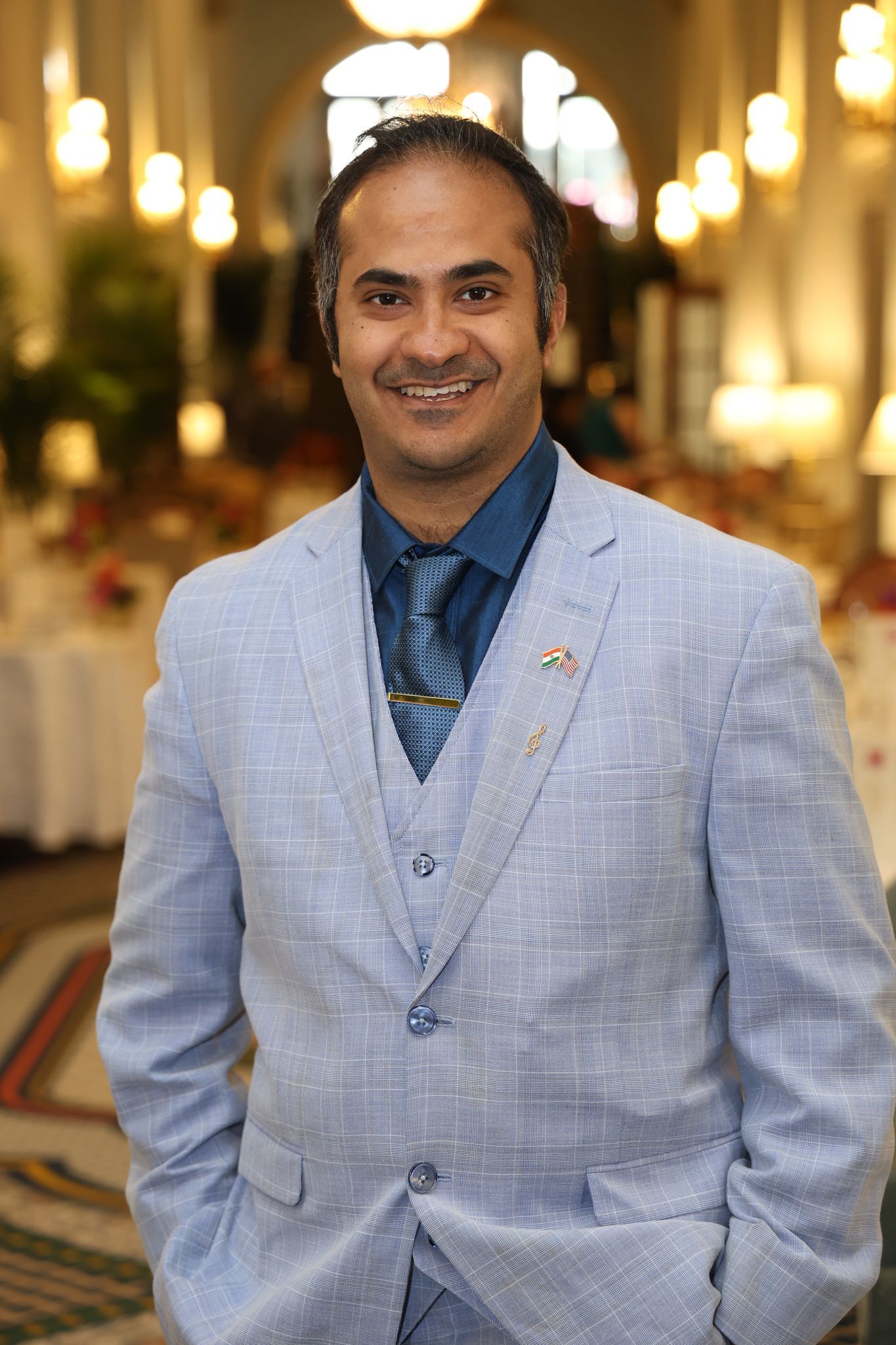
Akshobh Giridharadas (akshobh@gmail.com) is a Washington, D.C. based public policy professional and previously a Visiting Fellow for the Observer Research Foundation (ORF). A journalist by profession, he was based out of Singapore as a reporter and producer with Channel NewsAsia Singapore, covering international business news. He is a two-time TEDx Speaker.
Media: Min. of Foreign Affairs of Pakistan
The Pilot commentaries and responses represent the views of the respective authors. Alternative viewpoints are always welcomed and encouraged. Please write to [email protected] for more information on how to contribute.