In April South Korea’s President Lee Jae Myung, of the progressive Democratic Party, made his first visit to India since assuming office last June, marking the first state visit by a Korean president in eight years. While the visit was remarkable for many reasons, what truly stood out was the political signaling it sent to India and, more importantly, to Lee’s own administration and South Korean industries, emphasizing the importance of this relationship. The visit culminated in a series of important outcomes, agreements, and frameworks expected to further institutionalize and strengthen the foundation of strategic partnership. Furthermore, it paved the way for a foundation that better addresses existing and future challenges.
A new phase in India-South Korea ties
For a long time, the India-South Korea special strategic partnership was, infamously, neither special nor strategic. Many scholars opine that these ties lack a strategic vision for both the bilateral and regional spheres. However, since Lee assumed office, the focus has again turned back to India. This has been a trend in Korea-India ties, where under both progressive and conservative administrations the pace of relations varies between acceleration and deceleration, rather than a steady pace throughout. This trend was visible during the tenure of Moon Jae-in (2017-22), South Korea’s last progressive administration, under whom India secured a place in the New Southern Policy (NSP), elevating India’s strategic profile in Korea’s regional calculus.
Lee’s diplomatic approach takes a leaf out of Moon’s foreign policy playbook, emphasizing the importance of diplomatic diversification and de-risking, creating a continuum. However, deepening ties with New Delhi is not only a fallback on the progressive legacy, but a strategic imperative for the current Korean administration given the regional challenges Korea faces today. These include increasing regional uncertainty, the emerging China-North Korea-Russia axis, supply chain disruption, technological restrictions, and growing mercantilism. These factors make it all the more vital to invest in the relationship with India. Therefore, the visit should not be seen as a routine diplomatic exercise but a strategic response to national and regional challenges.
For its part, India is increasingly looking to its east to find solutions to its own security and development challenges. Previously, New Delhi adopted a lackadaisical approach to its relations with Korea, moving at its own slow pace. However, considering the deteriorating global environment, particularly its strained ties with the US and inimical relations with China, and the serious implications for the Indian economy and security, has nudged India to look more favorably to its East Asian partners. Recognizing the severity of the threat, India moved quickly to deepen its ties with Korea, particularly given its capabilities and capacities to support India. While Korea has always been among India’s most important partners, its strategic importance and profile have grown in recent years.
This has happened because of the Indian government’s economic policy, seeking greater investment in sectors such as shipbuilding, electronics, IT hardware, green energy, steel, critical minerals, advanced batteries, EVs, and semiconductors. Korea’s technological prowess, advanced manufacturing, and industrial capacity have further convinced India to forge a comprehensive strategic partnership. This intent was conveyed by Indian Foreign Minister S. Jaishankar, who at an event in Korea in 2024 advocated for this relationship to do more to advance mutual and regional prosperity. He said, “India and RoK have a growing responsibility to actively contribute to the reshaping of the global order. The era when a few powers exercised disproportionate influence over that process is now behind us. …it has become a more collaborative and broad-based endeavor”
Following April’s bilateral meeting, ties between India and South Korea now have a vision and agenda that match the ambitions for this partnership. Although domestic considerations and external drivers have given this relationship new meaning, what has done the most to reignite ties is their respective leaders. President Lee, in particular, has recognized the lacuna that affects the bilateral ties.
Riding the second wave
The first phase of India-South Korea ties began with India’s liberalization in the mid-1990s. Following that period, Korea became a vital part of India’s economic growth story. LG, Samsung, and Hyundai became household names in India during the first phase, which lasted until 2015, when it ran out of steam and needed another upgrade. Recognizing this necessity, the conservative then-president Park Geun-hye elevated bilateral relations to special strategic ties, providing a new strategic direction. Nonetheless, both India and Korea have failed to take the mission forward.
However, less than a month into his tenure, President Lee Jae Myung sent former Prime Minister Kim Boo-kyum as the special envoy to India, among the first countries to receive an envoy from Lee. This gesture was intended to convey Seoul’s clear intent to deepen ties with New Delhi.
Following a period of diplomatic stagnation, bilateral relations have now entered the second phase, marked by two key aspects: deepening industrial partnership and greater cooperation in India’s development story. While industrial cooperation has been part of the diplomatic conversation for some time, little action has occurred on that front. However, recent outcomes and announcements by the governments and industries have generated considerable optimism. This time the Indian and Korean companies are not only cooperating but partnering across strategic sectors. For instance, JSW Steel has joined hands with POSCO to further expand India’s steel industry. Hyundai has also announced plans to build a greenfield shipyard in Tamil Nadu, India, the first major foreign greenfield investment in the sector. Likewise, Indian Reliance Industries has partnered with Samsung C&T for long-term green ammonia supply. Similarly, Korean companies are also investing in India’s semiconductor ecosystem. Companies like APACT have opened their OSAT facility in the country, and others like Seoul Semiconductor are actively exploring plans to set up manufacturing plants in India. As a result, this second phase is ushering in the second wave of investment, particularly in the strategic sectors such as shipbuilding, semiconductor, electronics, EV batteries, and steel.
Walking lockstep with the private sector, the government is further reducing bottlenecks and regulatory flab to expedite deals. With a special focus on further easing industrial cooperation between the two countries, some concrete steps have been taken at the highest level on both sides. India has created a dedicated Korea desk in the prime minister’s Office and Korea has opened a task force for economic cooperation with India in the presidential office. Additionally, the signing of MoUs on the India-ROK Industrial Cooperation Committee and cooperation in the field of small and medium-sized enterprises further institutionalizes economic ties, a long-standing demand from the business communities. All these initiatives were the result of direct intervention by the leaders, who found it necessary to deepen industrial partnerships, thereby allowing greater flow of investment in India. Additionally, unlike before, Indian states, such as Andhra Pradesh and Tamil Nadu, are also making efforts to attract Korean Investments into India, setting a new benchmark for para-diplomacy.
On the second aspect, Korean companies today are also looking to support India’s development ambitions across sectors, be it shipbuilding, semiconductors, advanced batteries, green steel or electronics. One important way to achieve this is through capacity building and workforce development initiatives, such as skilling and training. This change has occurred after a detailed assessment that the partnership could benefit from development cooperation that goes beyond economic transactions, as Japan has done. Such cooperation will not only generate more economic and employment opportunities but will also attract industries that will elevate India’s manufacturing capability.
Reciprocating the Korean president’s gesture, the Indian prime minister will visit South Korea next year, his first visit to the country since 2019. Before Modi’s visit, both sides will identify specific strategic areas where the partnership could be further deepened, potentially elevating it to a new level. As the Modi-Lee meeting in 2026 helped strengthen the Indo-Korea strategic partnership, the upcoming 2027 meeting in Korea is expected to be the one where this relationship finds its true meaning. Nonetheless, despite recent progress and optimism, this is just the starting point for the relations, and there is a long way to go. Therefore, to ensure this relationship delivers, the two sides must leverage the existing forums and platforms to create a favorable environment for all stakeholders to engage. This will help develop strategic trust between the two sides, which is currently missing.
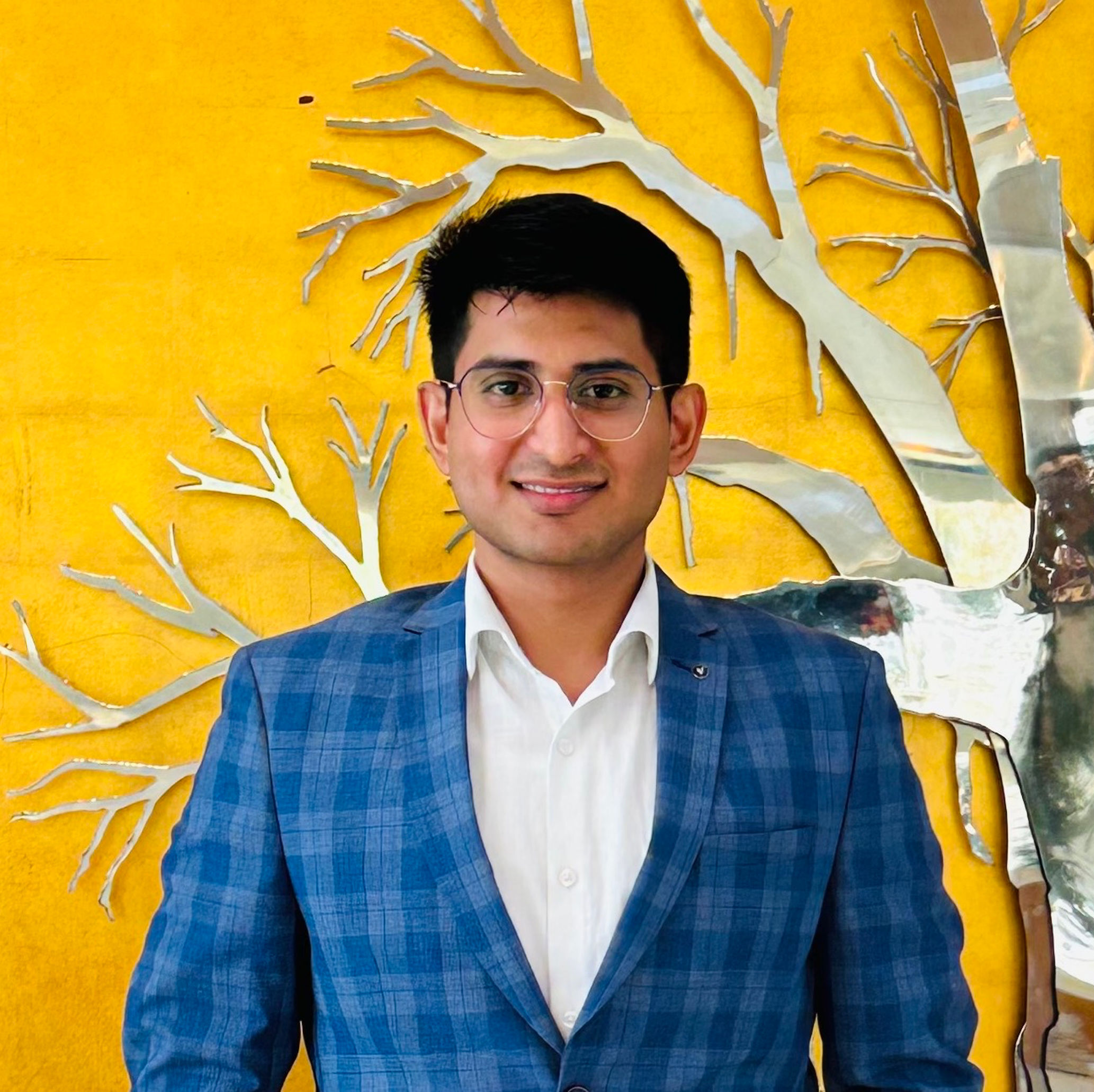
Dr Abhishek Sharma ([email protected]) is a Junior Fellow, Indo-Pacific at the Strategic Studies Programme, Observer Research Foundation. He was a Pacific Forum Nonresident James A Kelly Korea Fellow in 2023.
Media: Yonhap
The Pilot commentaries and responses represent the views of the respective authors. Alternative viewpoints are always welcomed and encouraged. Please write to [email protected] for more information on how to contribute.