An Indian iron ore company, a bilateral agreement between Washington and New Delhi, and the Trump administration’s America First policies may hold the key to the final resolution of a long-standing political dispute between the government of Papua New Guinea and a state seeking complete political autonomy.
The Lloyds Metals and Energy Limited was endorsed in November 2025 by the Papua New Guinea (PNG) Autonomous Bougainville Government’s (ABG’s) Executive Council to redevelop the Panguna mine project. The local Bougainville Copper Limited (BCL) company is the lawful exploration license holder (EL01) of the mine’s redevelopment project, but it lacks the financial and technical capacities to reopen the mine independently. On Jan. 14, ABG officially became the sole majority shareholder of BCL, with a 72.9% stake. Although BCL proposed engaging the Chinese-based giant miner CMOC Group Limited during bidding, the ABG rejected CMOC’s proposal as it included a condition diluting the autonomous government shares to CMOC as part of the partnership.
Contribution, closure, and redevelopment
The ABG executive government’s decision to engage LMEL to reopen Panguna mine came amid consultations between the autonomous government and the central government of PNG over its political independence. Almost 98% of the estimated population of 300,000 Bougainvilleans voted in favor to break away from PNG and become an independent state in the 2019 referendum, which was one of the terms of the Bougainville Peace Agreement (BPA) reached in 2001. While the decision to reopen Panguna mine has provided optimism and leverage to ABG and its people to determine their economic future, the region’s political future remains a constitutional matter to be decided by the government of PNG and its National Parliament, even though ABG has set Sept. 1, 2027 as a de facto deadline for effective political independence.
Panguna is not an ordinary mine. Since its full operation in 1972, it has greatly contributed to the economic and political development of PNG from a period of self-government in 1973 to an independent sovereign state in 1975 and beyond. During the mine’s 17-year operation between 1972 and 1989, Panguna produced significant quantities of high concentrates of copper, gold, and silver. Despite the mine’s contribution of almost 44% of PNG export earnings, generating approximately 17% of the country’s internal revenue during Panguna’s operation, only 2% of the profits were shared with the mine’s local ownership. The Panguna mine was closed in May 1989 as disgruntle locals, angered by unequal distribution of profit and severe environmental damage caused by toxic waste disposal, demanded justice from the government of PNG and the Rio Tinto Group, the Panguna mine’s former owner and the majority shareholder of BCL. This led to the outbreak of a decades-long civil war claiming more than 15,000 lives.
As one of the world’s biggest open pit copper and gold mines, Panguna remained dormant for nearly four decades since its closure. ABG’s decision to reopen the mine comes at an enormous cost in the short-term but could result in long-term benefits if done properly given the mineral deposits beneath the dormant cratered mine. A BCL’s 2021 study indicated that the redevelopment phase would take seven years, with an estimated $6 billion upfront investment, before Panguna mine could fully operationalize. Further, the mine holds estimated reserves of 5.3 million tons of copper and 19.3 million ounces of gold worth a combined projected value of $160 billion at the current market price. The decision to reopen the mine by the incumbent ABG leadership is worth the risk but comes with a challenge raised by its predecessor government: whether resource mobilization is adequate to ensure the mine reaches its production stage under the current redevelopment partnership arrangement.
Nonetheless, the redevelopment efforts of Panguna mine are unique because they comply with the region’s regulatory framework. The redevelopment phase of Panguna mine is explicitly detailed in the BCL’s exploration license (EL01) as compliance measures of the 2015 Bougainville Mining Act and entails primarily pre-feasibility and feasibility studies focusing on the identification of land ownership and accessibility, social mapping, as well as geological, engineering, and environmental baselining. After LMEL was endorsed by ABG, the Indian miner incorporated in April 20, 2026 the Lloyds Panguna Metals and Energy Ltd as its subsidiary to commence the redevelopment phase in partnership with BCL to advance EL01.
The US-India Critical Minerals Framework and ABG’s position
The US and India, classified among the largest consumer markets globally after China on critical minerals and rare earths agreed in May 2026 to strengthen their industrial and manufacturing capacities through the Strategic Critical Minerals Cooperation Framework. The bilateral framework aims to ensure supply chain resilience and diversification, including collaborative engagement—domestic and international—on mining, processing, recycling, and financing of critical minerals and rare earths. More importantly, the Critical Minerals Framework between Washington and New Delhi is also an expansion of the US-led Forum on Geostrategic Engagement (FORGE), a multilateral initiative of 17 like-minded partner nations to coordinate to advance policy and project-level initiatives through public-private partnership arrangement aimed at securing a resilient supply chain on critical minerals and rare earths.
Since its launch at the inaugural Critical Minerals Ministerial on Feb. 4, FORGE has not only advanced Trump’s “America First” diplomacy on critical minerals through bilateral agreements and MOUs with allied and partner nations, including India, but also supported project-level initiatives worth more than $30 billion, both in the US and abroad in partnership with the private sector through investment mechanisms such as letters of interest and loans on securing the critical minerals supply chain. Most critical minerals and rare earth initiatives are carried out and funded by a few selected US federal agencies, including the Export-Import (EXIM) Bank of the United States, both in the US and overseas.
ABG has options to choose from given its unique position on Panguna mine’s redevelopment efforts. Since January this year, ABG has played two distinct roles on Panguna mine’s reopening process. First is ABG being the majority shareholder of BCL, the lawful holder of EL01 license and second as regulator of Panguna mine under the 2015 Bougainville Mining Act (including its subsequent amendments). The engagement of LMEL as BCL’s partner to advance EL01 for Panguna’s redevelopment already indicates ABG’s full authority over the mine’s future, a decision ABG has taken without any intervention from the government of PNG and its mineral regulations. Regardless of ABG’s status as a non-sovereign state, the autonomous government holds substantial amount of power to determine the Panguna mine’s current and future development trajectories. ABG could leverage that position to negotiate mutually beneficial deals for Panguna mine’s redevelopment through multilateral financing arrangement should there be a need to do so.
Advancing the current redevelopment partnership efforts of Panguna mine project through US-India Critical Minerals Framework could be a negotiating platform ABG can rely on. FORGE, as the foundation of the Washington-New Delhi Critical Minerals Framework, not only provides the financing platform but also captures the essential elements of BCL’s EL01 on sustainable mining practices with respect to the environment. If ABG decide to do so, this does not necessarily mean disregarding its current redevelopment partnership deal on the Panguna mine project, but reinforcing it to ensure additional support in the redevelopment phase to reach production, the ultimate goal that the ABG’s incumbent executive government so desperately desires. Panguna’s seven-year duration and an estimated initial $6 billion capital investment for the mine’s redevelopment is probably one of the world’s longest and costly exercises, as suggested by BCL. The non-operational and dormant nature of the largest cratered open pit Panguna copper and gold mine for almost 40 years requires, in a pragmatic sense, additional financial and technical support to strengthen the mine’s current redevelopment efforts and the onus solely lies with ABG’s executive government to decide on as the majority shareholder and regulator of Panguna mine project.
Conclusion
At this stage, ABG’s priority should be to ensure that the Panguna mine begins production, even more so than political independence by September 2027. Since 2001, the PNG government has upheld the terms of the Bougainville Peace Agreement through continuous dialogue and consultation with ABG, reducing the urgency of effecting complete autonomy now. The 2019 referendum’s result was the clearest indication of how serious the government of PNG is in honoring the terms of the agreement. If the PNG National Parliament decides to grant political independence to Bougainville through ratification in favor of the 2019 referendum results, then the ABG would require $350-$485 million annually to run its own sovereign affairs, as suggested by Harvard’s Growth Lab study published in March 2026. Since becoming fully autonomous in 2005, ABG has only generated 5% of its internal revenue while the rest were from PNG government and external partners. The key area in which ABG should prioritize on at its executive leadership is economic preparedness, which currently is a prerequisite for its political independence efforts. And the only way to achieve that is to ensure Panguna mine begins production.
In that sense, leveraging the US-India Critical Minerals Framework is essential for achieving the ABG’s political objectives, even more than independence itself.
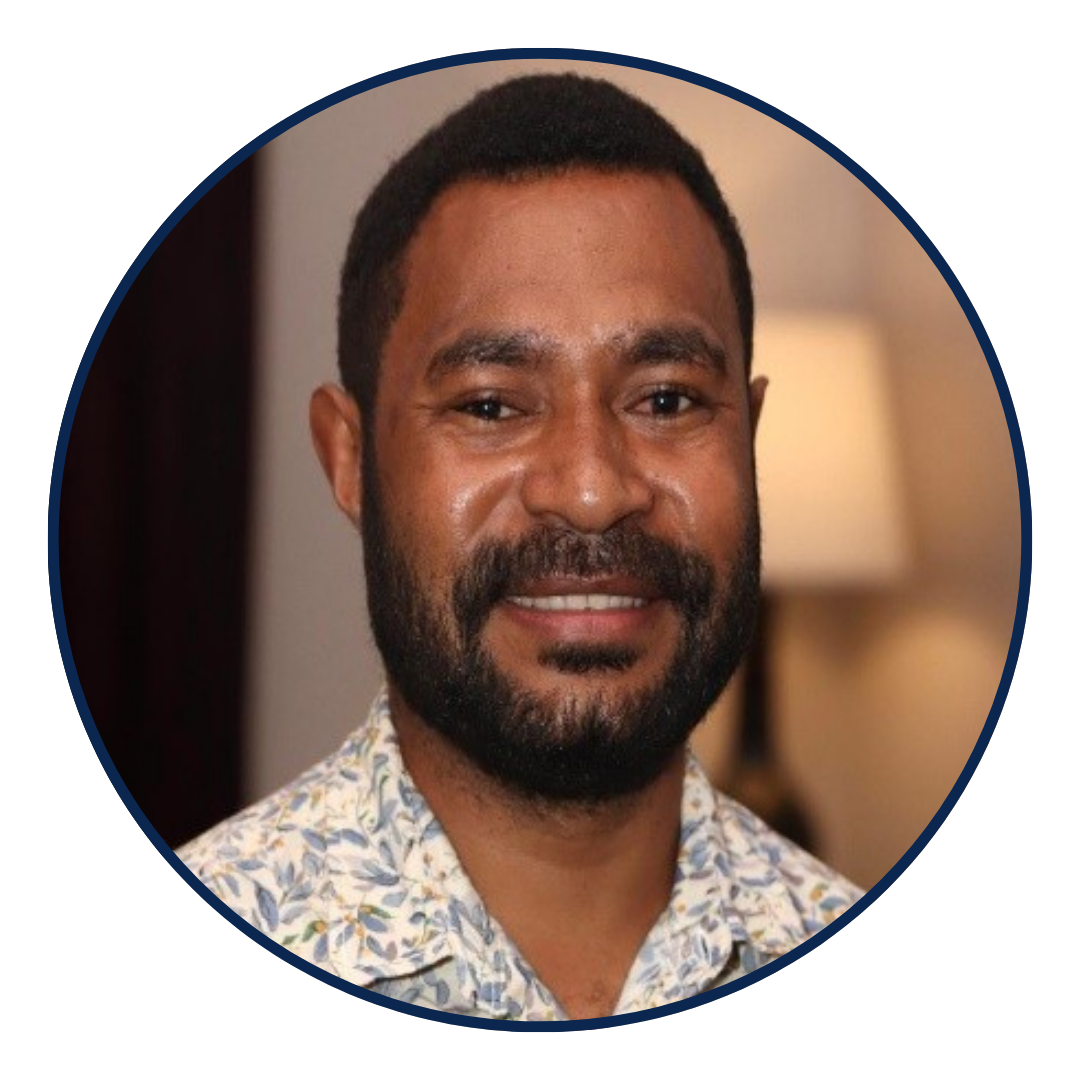
Moses Sakai ([email protected]) is a Fulbright Visiting Scholar at Pacific Forum and former Resident Lloyd and Lilian Vasey Fellow. He previously worked as a Research Fellow at the Papua New Guinea National Research Institute and was a visiting scholar on US foreign policy at the University of Delaware under US State Department’s Study of the U.S Institute (SUSI) for Scholars Program.
Media: Catherine Wilson/Al Jazeera
The Pilot commentaries and responses represent the views of the respective authors. Alternative viewpoints are always welcomed and encouraged. Please write to [email protected] for more information on how to contribute.