

Japan’s Defense Minister Koizumi Shinjiro’s visit to India on Aug. 19–20 marked an important step in the evolution of India–Japan defense relations. Coming only weeks after Prime Minister Takaichi Sanae’s visit to India in July, it should be seen not as a standalone engagement but as an attempt to translate the political understanding reached by Modi and Takaichi into practical defense cooperation.
The timing is significant. Japan is moving toward a more capable defense posture; India is seeking trusted partners for co-development, maritime security and manufacturing. The convergence between the two countries is therefore becoming more practical and less declaratory.
Koizumi’s visit followed his engagement in Australia. Taken together, the two visits illustrate Japan’s effort to build a network of capable security partners across the Indo-Pacific. Australia provides Japan with an interoperable defense partner, while India brings its position as a major maritime power in the Indian Ocean and a growing defense-industrial base
From strategic convergence to operational cooperation
India and Japan have spent the past decade building the institutional foundations of their security relationship through the 2020 Acquisition and Cross-Servicing Agreement, the 2+2 dialogue and increasingly sophisticated military exercises. The next stage is to make this relationship operational.
The most important outcome of Koizumi’s visit was the signing of a Memorandum of Arrangement on Maritime Security Cooperation. It provides a framework for practical cooperation between the Indian Navy and the Japan Maritime Self-Defense Force, including maritime domain awareness, information sharing, search and rescue, humanitarian assistance and disaster relief, and protection of sea lanes of communication.
This maritime focus makes strategic sense. Both countries depend heavily on secure sea lanes for trade, energy and economic security. Japan’s dependence on maritime trade connects its interests directly with the Indian Ocean. At the same time, India has an equally strong interest in keeping the Indian Ocean and western Pacific connected and open.
The two sides are also exploring reciprocal access to port and repair facilities. Indian facilities could support Japanese vessels operating west of the Malacca Strait, while Japanese facilities could support Indian deployments in the western Pacific. This could give the relationship greater operational depth.
Shipbuilding could be the game changer
Perhaps the most promising long-term opportunity is naval shipbuilding and design. India and Japan agreed to explore joint development of naval ships and ship designs, combining Japanese technological expertise with India’s production capabilities. Japan will also examine greater use of Indian shipbuilding capacity under Make in India.
This represents a potentially important shift. Earlier defense cooperation was centered largely on exercises and the possibility of acquiring Japanese equipment. The emerging model is different: Japanese design and technology combined with Indian manufacturing and shipyards, with the resulting capabilities potentially deployed across the Indo-Pacific. If made commercially and technologically viable, this could become one of India’s most important defense-industrial partnerships.
Mine-countermeasure cooperation is another significant, if less visible, area. Japan has considerable expertise in mine warfare and maritime clearance, while India has a major interest in protecting ports and sea lanes. Cooperation could eventually extend to equipment, sensors, unmanned systems and training.
UNICORN: The beginning of a wider technology partnership
The UNICORN integrated communications antenna system remains the flagship India–Japan defense technology project. The two sides have described it as their first defense equipment transfer project and committed themselves to its early realization.
Its significance goes beyond the equipment itself. Japan has historically maintained significant restrictions on defense equipment exports and technology transfers. Its willingness to transfer defense technology to India signals a change in Tokyo’s approach.
For India, access to Japanese technology can complement its growing industrial and technological capabilities. The real test, however, will be what follows UNICORN. The two sides have directed their services to identify additional projects, while DRDO and Japan’s Acquisition, Technology and Logistics Agency (ATLA) will deepen cooperation. A Defense Industry Forum will also be established.
It is important not to overstate what has been achieved. No major jointly produced missile, fighter aircraft or naval platform was announced during the visit. Instead, the visit created mechanisms to move toward such cooperation. The July Modi–Takaichi summit provided the political commitment; Koizumi’s visit has begun implementation.
Exercises are becoming more serious
Military exercises are also moving from symbolism towards interoperability. The Dharma Guardian army exercise and JIMEX maritime exercise will be expanded. Veer Guardian 26 will see Japanese fighter aircraft participate in an exercise in India for the first time. The two sides also agreed to make exercises more complex, introduce unmanned systems and explore short-notice exercises.
This matters because air cooperation has traditionally lagged behind the maritime relationship. Japanese fighter aircraft operating in India will provide an opportunity to improve operational familiarity and air-combat training. The broader trend is clear: Exercises are laboratories for interoperability rather than simply demonstrations of friendship.
A networked Indo-Pacific
The relationship is also acquiring a wider regional dimension. India, Japan, and Indonesia conducted their first trilateral naval PASSEX in February 2026, and the ministers agreed to expand such cooperation. They also endorsed greater use of the Indo-Pacific Logistics Network, including for disaster-relief operations.
This shows that neither India nor Japan is seeking to create another formal alliance. Instead, a network of overlapping partnerships is emerging.
The challenge is implementation
Japan’s own defense transformation adds urgency to this relationship. Yet India–Japan defense cooperation has often suffered less from a lack of political goodwill than from slow implementation. The proposed Director-General/Joint Secretary-level Working Group covering operations, intelligence, equipment, technology and industry is therefore important. The decision to accelerate the fourth 2+2 Foreign and Defense Ministers’ meeting in Tokyo further reinforces institutionalization.
Expectations should nevertheless remain realistic. Japan is closely integrated with the US alliance system, whereas India retains strategic autonomy. Their procurement systems and operational priorities differ, and Japanese export regulations and Indian procedures can both be demanding.
A relationship entering a new phase
Koizumi’s visit is best characterized as a significant consolidation rather than a dramatic breakthrough. Its importance lies in several shifts: from exercises to interoperability; from equipment transfer to technology cooperation; from technology cooperation to co-development and co-production; from bilateral naval cooperation to Indo-Pacific networks; and from Japanese investment in India to potential Japanese use of Indian defense-industrial capacity.
The most promising development is joint naval shipbuilding and design. The most immediately operational is maritime-security cooperation and access to repair facilities. The most politically significant is UNICORN and Japan’s opening of its defense-technology ecosystem to India. The most strategically interesting is the emerging India–Japan–Indonesia maritime cooperation.
Against the backdrop of Prime Minister Takaichi’s July visit and Japan’s accelerating defense transformation, the message is becoming clear: Tokyo increasingly sees India not simply as a strategic partner in the Indian Ocean, but as an essential operational and defense-industrial partner in building a resilient Indo-Pacific.
The next test is whether the new mechanisms can convert political convergence into actual ships, technologies, production lines and deployable capabilities. That is where this new phase of India–Japan defense cooperation will ultimately be judged.
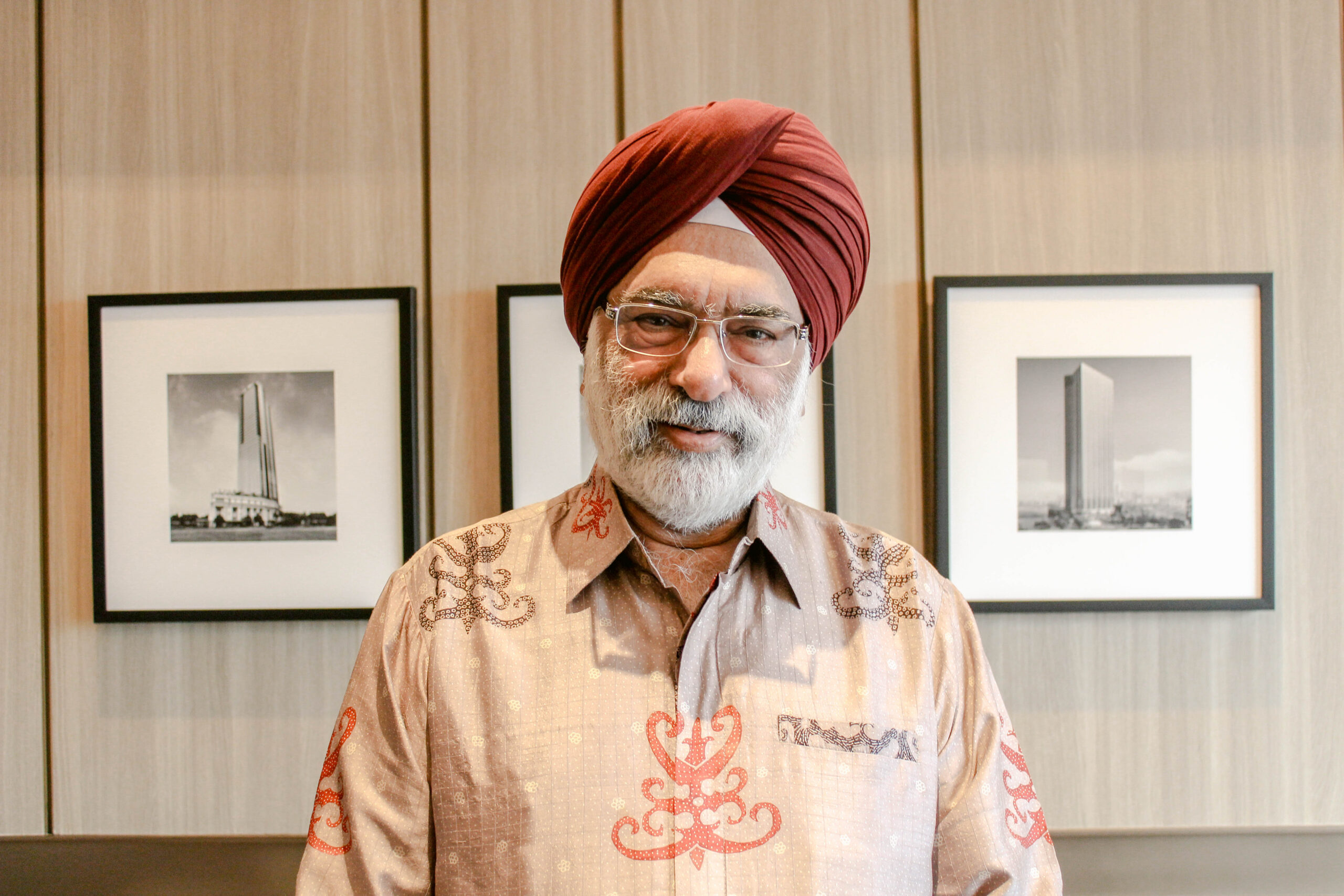
Gurjit Singh ([email protected]) is a former Ambassador, Japanologist and author of The Durian Flavour. Simran Walia ([email protected]) is Research Analyst at the Manohar Parrikar Institute of Defence Studies and Analyses (MP-IDSA) in New Delhi.
Media: Bloomberg
The Pilot commentaries and responses represent the views of the respective authors. Alternative viewpoints are always welcomed and encouraged. Please write to [email protected] for more information on how to contribute.